Steel Gauge . Gauge to thickness chart gauge stainless galvanized sheet steel aluminum fraction inches (mm) inches (mm) inches (mm) inches (mm) 30 0.0125 (0.33) 0.0157 (0.40) 0.0120 (0.30) 0.0100 (0.25) 29 0.0141 (0.36) 0.0172 (0.44) 0.0135 (0.34) 0.0113 (0.29) 28 1/64 0.0156 (0.41) 0.0187 (0.47) 0.0149 (0.38) 0.0126 (0.32) By using the tool we’ve shown a picture of above, you’ll be able to see that 12 gauge steel is 2.7781mm thick, 10 is 3.5718mm, 16 is 1.5875mm, 18 is 1.27mm, 20 is.9525mm, 22 is.7937mm and 7 is 4.726mm. 050 PSI Pressure Gauge 2.5" 304 Stainless Steel Dial, 1/4 from shop.prmfiltration.com Copper thickness, for example, is measured in ounces, representing the weight of copper contained in an area of one square foot. This is known as the manufacturers' standard gage for sheet steel. The larger the gauge number, the thinner the metal (not applicable for zinc).
Gauge Factor Derivation. Therefore, the gauge sensitivity is described in terms of characteristics called the gauge factor which is defined as the unit change in resistance per unit change in length. L = g f x rδl / δr.
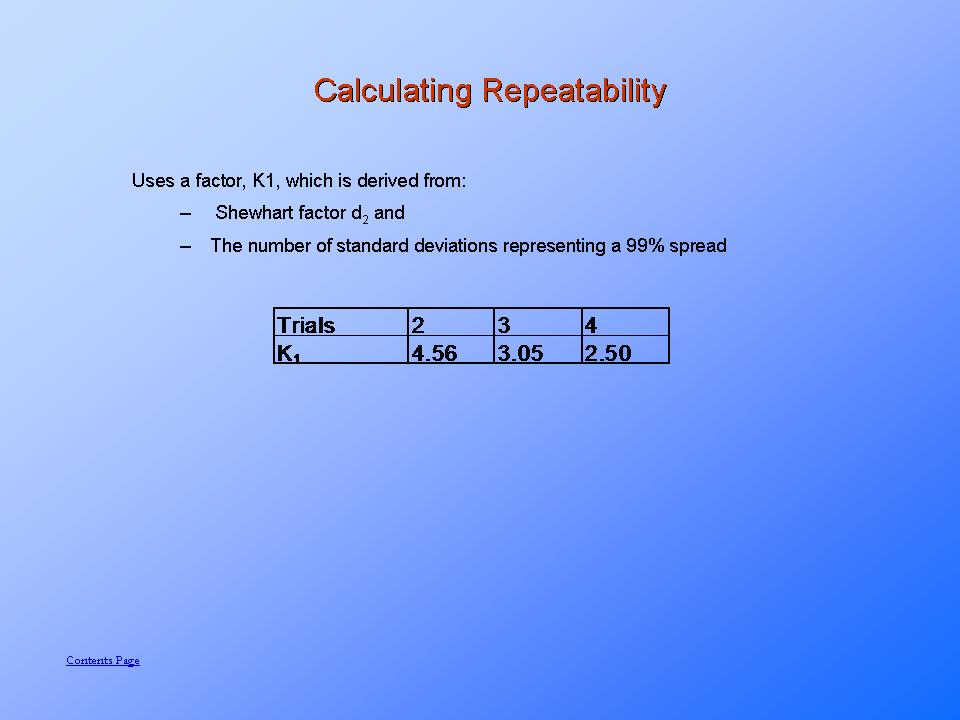
Gauge Repeatability and Reproducibility. Gauge R and from www.presentationeze.com
Note that g is a unitless number. 1 microstrain = 1 μm/m. The gauge factor is the sensitivity coefficient of strain gauges and, is given by the formula:
The Gauge Factor Is The Relative Change In Resistance Divided By Relative Change In Length (I.e., The Definition Of Strain).
A strain gauge is a resistor used to measure strain on an object. Calculating for the initial length of the strain guage when the strain guage factor, the change in resistance of the strain guage, the resistance of the strain guage and change in length of the strain guage is given. Thus, a strain of 0.1% will cause a 0.24 ω change in a 120 ω strain gauge.
Therefore, The Gauge Sensitivity Is Described In Terms Of Characteristics Called The Gauge Factor Which Is Defined As The Unit Change In Resistance Per Unit Change In Length.
Rg = resistance of the undeformed gauge. What is the gauge factor, and what is the derivation to obtain a gauge factor? This can be mathematically written as, g f = (δr / r) / (δl / l)
This Changes Its Resistance (R) In Proportion To The Strain Sensitivity (S) Of The Wire's Resistance.
휺푳 = 120 x 2 x 500 m휺 δ푹 = 0.12 ω (it’s a very small resistance change) to measure such a small change in resistance, a bridge circuit is needed to convert this change in resistance to the change in voltage. Note that g is a unitless number. Gf = [δr / (rg * ε)] where, δr = change in the resistance caused due to strain.
L = Initial Length Of The Strain Gauge G F = Strain Gauge Factor Δr = Change In Resistance Of The Strain Gauge
2 leads to the standard ionization gauge equation ic. Derivation of gauge factor the gauge factor is defined as the unit change in resistance per unit change in length. The sensitivity of a strain gauge is expressed in the gauge factor.
Gauge Factor Is Defined As The Ratio Of Fractional Change In Electrical Resistance To The Fractional Change In Length (Strain):
It is also called sensitivity of the strain gauge. The strain is usually expressed in terms of microstrain. This deformation in the shape is both compressive or tensile is called strain, and it is measured by the strain gauge.


Comments
Post a Comment