Steel Gauge . Gauge to thickness chart gauge stainless galvanized sheet steel aluminum fraction inches (mm) inches (mm) inches (mm) inches (mm) 30 0.0125 (0.33) 0.0157 (0.40) 0.0120 (0.30) 0.0100 (0.25) 29 0.0141 (0.36) 0.0172 (0.44) 0.0135 (0.34) 0.0113 (0.29) 28 1/64 0.0156 (0.41) 0.0187 (0.47) 0.0149 (0.38) 0.0126 (0.32) By using the tool we’ve shown a picture of above, you’ll be able to see that 12 gauge steel is 2.7781mm thick, 10 is 3.5718mm, 16 is 1.5875mm, 18 is 1.27mm, 20 is.9525mm, 22 is.7937mm and 7 is 4.726mm. 050 PSI Pressure Gauge 2.5" 304 Stainless Steel Dial, 1/4 from shop.prmfiltration.com Copper thickness, for example, is measured in ounces, representing the weight of copper contained in an area of one square foot. This is known as the manufacturers' standard gage for sheet steel. The larger the gauge number, the thinner the metal (not applicable for zinc).
How To Use Feeler Gauge Guitar. Measure the height of the first two frets by laying a straight edge across them and sliding different combinations of feeler gauge blades under it until they touch the straight edge. Feeler gauges are handy to have for doing guitar setups and other precise measuring tasks.w.
How to slot a nut to depth in 5 minutes My Les Paul Forum from www.mylespaul.com
This tool has gauges from 0.02mm to 1.00mm. Measure the height of the first two frets by laying a straight edge across them and sliding different combinations of feeler gauge blades under it until they touch the straight edge. If you want to measure this rising tongue look at the gap between the ninth fret and the last fret.
You Want The Feeler Gauge To Be Exactly Perpendicular To The Imaginary Line Going From The String To The Fret At The Spot Where The String Is Closest To The Fret Which Is Presumably The Spot Where The String Touches The Fret When It Is Played.
Under the string radius gauge. Anyway,.009, 010, 013 are all you really need to setup fenders. Used to adjust the radius of the strings to match the radius of the fingerboard (see radius gauge 10 above).
In This Trade Secret, Blake Demonstrates Fast And A.
Do not force the gauge into the gap. I set the 1st string at the 12th to 1.19 and the 6th string to 1.98. Thumbwheel for easy removal of individual feeler gauges.
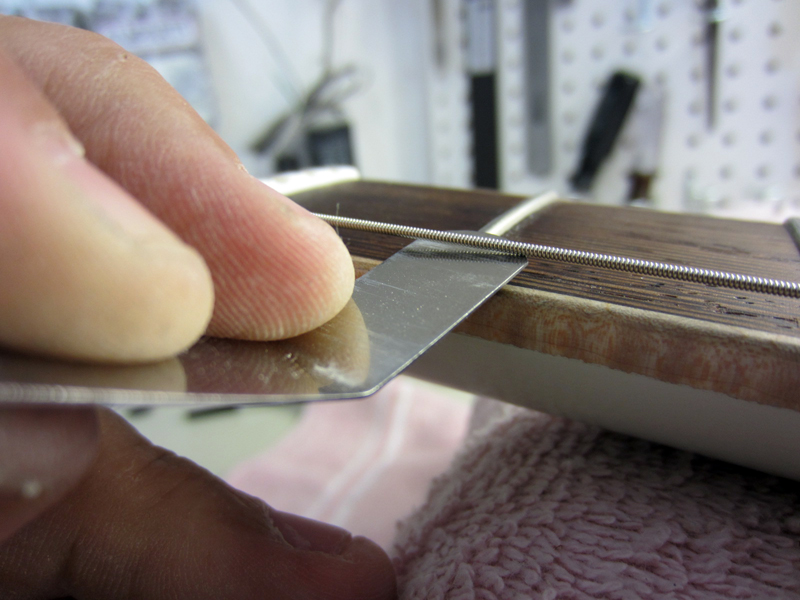
With Your Free Hand, Use The Feeler Gauge To Measure The Gap Between The Bottom Of The String And The Top Of The Eighth Fret (The Fret Wire Itself, Not The Fingerboard), Which Is Where The.
For the true measure, press the string down at the first and twelve fret and eyeball the gap. Affix the capo to the first fret and depress the high e string at the last fret (g string on a bass guitar), or where the neck joins the body (often the 17th fret on stratocaster and telecaster guitars). To set a measurement of.035 use the blade marked.035 or any combination stacked together, say.015 and.020 that adds up to.035.
Each Feeler Gauge Is Marked With Both.
It's not always possible to match the gauges exactly, so no need to. That equals 3/64ths and 5/64ths with conversion. Using the card, measure the gap between the bottom of the sixth string and the 7th fret, like this:
If You Want To Measure This Rising Tongue Look At The Gap Between The Ninth Fret And The Last Fret.
Feeler gauges are handy to have for doing guitar setups and other precise measuring tasks.w. Using the automotive feeler gauge set check the gap between the bottom of the string and the top of the eighth fret. A feeler gauge is used simply by trying if it fits into the gap.


Comments
Post a Comment